Rules, Safety & Best Spots

Lake Norman Boating Guide

Everything you need to boat Lake Norman, NCwith confidence - the rules, safety requirements, no-wake zones, best times to go, top coves and sandbars, and where to find rentals, ramps, fuel, and waterfront dining on North Carolina's largest lake.
  • NC boating rules & boater education explained
  • Navigation, no-wake zones & safety essentials
  • Best seasons, coves, sandbars & dock-and-dine stops
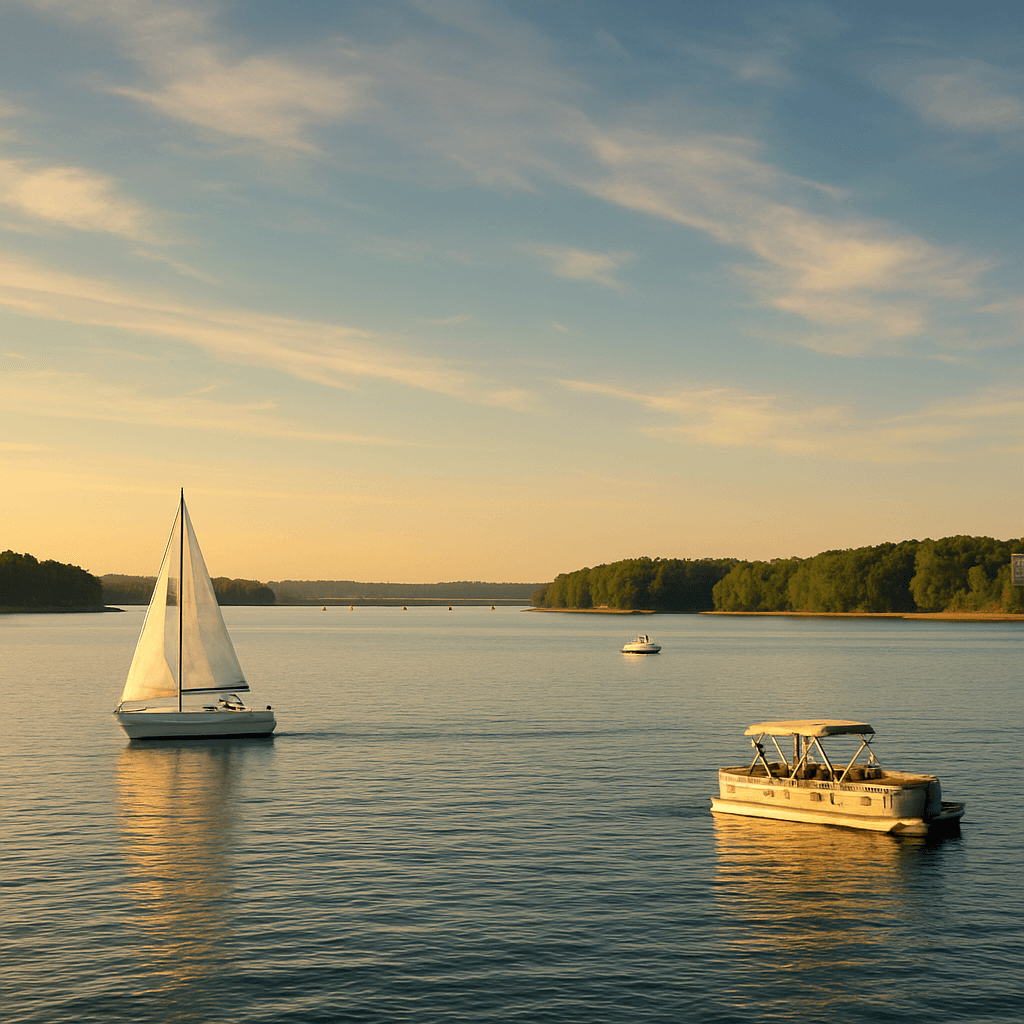
Boats cruising on Lake Norman at golden hour with a bridge in the distance

What This Guide Covers

Rules & Licensing

NC boater education & registration basics

Navigation & No-Wake

Markers, bridges & no-wake zones

Best Time to Boat

Seasons, weekdays & water conditions

Top Coves & Spots

Sandbars, swimming holes & dining

About Lake Norman

Lake Norman is North Carolina's largest man-made lake, created by Duke Energy in the early 1960s with the construction of Cox Mill Hydro Station, now the Cowans Ford Dam. Spanning roughly 32,000 acres with more than 520 miles of shoreline, the lake stretches across four counties - Mecklenburg, Iredell, Lincoln, and Catawba - and touches the towns of Mooresville, Cornelius, Davidson, Huntersville, and Denver.

Often called the 'inland sea,' Lake Norman is a recreational powerhouse just north of Charlotte. Boaters share the water with sailors, anglers, paddlers, swimmers, and water-skiers, all drawn to its wide open basins, quiet coves, waterfront restaurants, and dependable summer weather. This guide covers what you need to know to enjoy it safely and confidently.

Boating Rules & Licensing in North Carolina

North Carolina does not require a general boating license, but it does have a mandatory boater education law. Anyone born on or after January 1, 1988 must complete a NASBLA-approved boater education course before operating any vessel powered by a motor of 10 horsepower or more. Carry proof of completion while on the water.

All motorized vessels must be registered and display valid NC registration numbers and a current validation sticker. You must carry a US Coast Guard-approved life jacket for every person aboard, and children under 13 must wear one while the boat is underway. A throwable flotation device is required on boats 16 feet and longer, along with a sound-producing device and, after dark, proper navigation lights.

Operating a vessel while impaired is illegal and strictly enforced on Lake Norman. The legal limit mirrors driving laws, and law enforcement patrols the lake throughout the busy season. Designate a sober operator just as you would on the road.

Navigation, Markers & No-Wake Zones

Lake Norman uses standard US Aids to Navigation. Remember 'red right returning' as you head back toward the dam, and watch for white-and-orange regulatory buoys marking hazards, controlled areas, and no-wake zones. Shallow areas, stumps, and submerged hazards exist, especially in coves and near the shoreline, so keep a chart or navigation app handy.

No-wake zones are in effect near marinas, bridges, swimming areas, and many residential coves. In a no-wake zone you must operate at idle speed, producing the smallest possible wake. The lake's bridges - including the I-77, NC-150, and NC-73 crossings - are useful landmarks for orienting yourself on such a large body of water.

Because Lake Norman covers so much area, it's easy to lose track of where you are. Note your launch point, keep an eye on landmarks and bridges, and use the Lake Norman navigation map to plan your route before you leave the dock.

Best Time to Go Boating on Lake Norman

The prime boating season on Lake Norman runs from May through September, when water temperatures climb into the 75-85°F range and the lake comes alive. July and August are the warmest and busiest months; spring and early fall offer pleasant temperatures with thinner crowds.

For the calmest water and easiest launches, head out early in the morning or later in the afternoon, and favor weekdays over weekends. Midday summer weekends bring the most traffic and the biggest wakes, especially in the popular southern basin. Always check the forecast - afternoon thunderstorms can build quickly in the Carolina summer, and open water is no place to be caught in lightning.

Best Coves, Sandbars & Waterfront Stops

One of the joys of Lake Norman is exploring its coves and sandbars. On warm weekends, boaters raft up at popular sandbars to swim and socialize, while quieter coves toward the northern end near Lake Norman State Park offer peaceful anchorages and natural shoreline.

Plenty of waterfront restaurants welcome boaters who arrive by water, with dock-and-dine slips so you can tie up for lunch or sunset drinks. Combine a day of swimming and cruising with a stop at a lakeside grill for the quintessential Lake Norman experience.

Getting on the Water: Rentals, Ramps & Marinas

You don't need to own a boat to enjoy Lake Norman. Numerous companies rent pontoons, tritoons, ski boats, and jet skis, often with delivery to private docks. If you own a boat, a network of free public boat ramps and access areas ringing the lake makes launching easy, and full-service marinas provide slips, dry storage, fuel, and repair services.

Use the links throughout this guide to find rentals, ramps, marinas, fuel docks, fishing guides, and waterfront dining - everything you need to plan a great day on North Carolina's largest lake.

Lake Norman Boating FAQ

Plan Your Day on Lake Norman

Browse the #1 Lake Norman boating directory for rentals, marinas, ramps, fishing guides, and waterfront restaurants - everything you need for a great day on the water.

Explore the Directory